
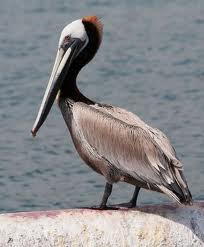
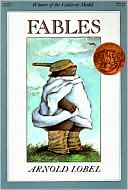
There’s a delightfully funny and clever fable, The Pelican and the Crane, by Arnold Lobel… as part of Lobel’s Caldecott Medal award-winning book FABLES…
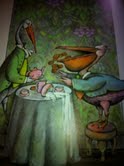
This fable tells us of a friendly, yet proper Crane who invites a Pelican to tea. The Pelican immediately accepts the Crane’s invitation, saying that no-one invites him anywhere.
At the tea and during tea conversation about the Pelican never being called to visit anywhere, the Pelican proceeds to spill a half sugar bowl of sugar, pours milk on the table, stuffs a pile of cookies into his mouth and wipes his mouth on the Crane’s tablecloth… all the while wondering aloud why nobody ever calls…
Author Arnold Lobel fills us in with the moral of the story: When one is a social failure, the reasons are clear as day.
What we discover in The Pelican and the Crane is a wonderful message that manners and etiquette are important.
But what is the real tweet-tweet on the Pelican in real-life ? Here are a few little tidbits to pass along to your kids and grandkids to combine literature and life:
– The Pelican is best known for its long beak and large throat pouch, called a gular pouch. (The Australian Pelican is thought to have the longest beak of any bird in the world.)
– The Pelican’s throat is used to catch fish.
– Pelicans fish in an interesting way. They swim together in groups, in a line or a U-shape, and flap their wings to drive schools of fish into shallow waters. The Pelicans then scoop up the fish in their pouches.
– The Pelican tips its pouch to drain the water and then swallows the fish whole. (The Brown Pelican and Peruvian Pelican species actually plunge-dive for fish.)
– The Pelican’s bill has a larger capacity than its stomach, but the Pelican doesn’t store food in its bill. Excess food is stored in the esophagus.
– Baby Pelicans often use their bills to get food from a parent’s pouch.
– Pelicans travel in flocks.
– The Pelican has a large wing span which provides for excellent gliding and soaring over water.
– Pelicans breed and nest in colonies. Some Pelican species build nests in trees, while others build nests on the ground or on rocks. The female lays 2 – 3 eggs in early spring and both parents care for the chicks. Most Pelicans feed their chicks by regurgitation.
– The Pelican has a unique way of resting by twisting its neck up near its back.
– Some species of the Pelican are endangered due to loss of habitat and pesticide poisoning.
Ah. The Pelican in real-life.
Reading the fable The Pelican and the Crane with your kids and grandkids, with a little knowledge of the Pelican in real-life, gives you so much to discuss… and your kids so much to think about as they embrace the literature.
Do you think the Pelican’s eating habits in real-life are similar to the Pelican’s manners at “tea”? Do you think author Arnold Lobel chose a good character in the Pelican?
The fable also gives us a great opportunity to talk with our kids about manners, social behavior, etiquette, invitations… and how to behave at “tea”!
Join me here each day in August for AUGUST TWEET-TWEETS on 365 Days of Literacy for Kids! A little fun, a little learning and a bit of “tweet-tweet”!



1 Comments
Comments are closed.