Once the school year gets into full swing, homework can quickly take over the kitchen table, dining room, and every available countertop. Pencils disappear, chargers go missing, papers pile up, and suddenly everyone is searching for a glue stick at 8 p.m.
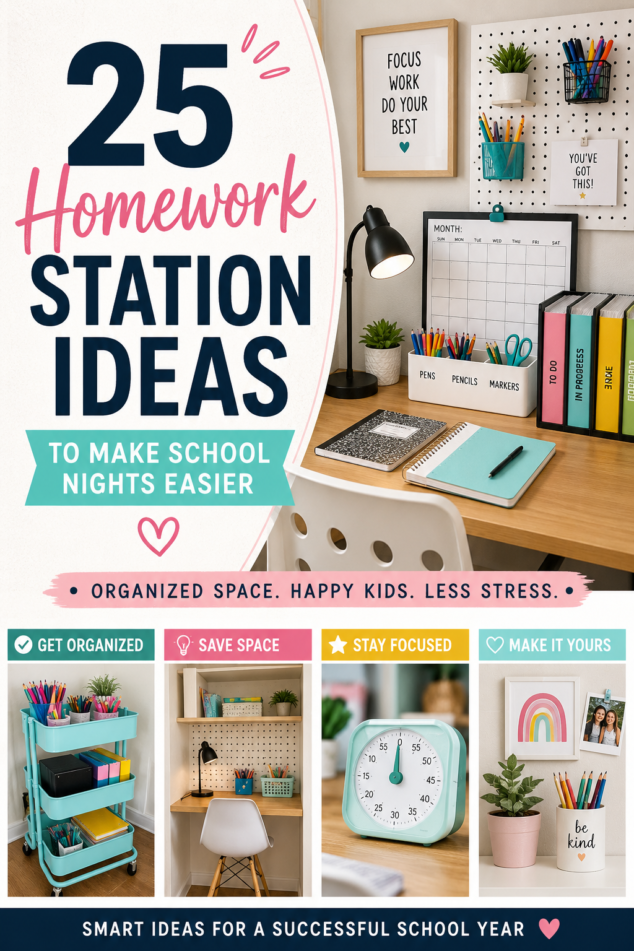
25 Homework Station Ideas to Make School Nights Easier

Creating a designated homework station for kids can make school nights feel much more organized.
And you don’t need an elaborate home office or huge budget to make one! The best homework station ideas are simply spaces where kids have the supplies, lighting, and organization they need to sit down and get their work done.
Whether you’re creating a homework area for an elementary school student, tween, or teen, here are 25 homework station ideas to help you get started.
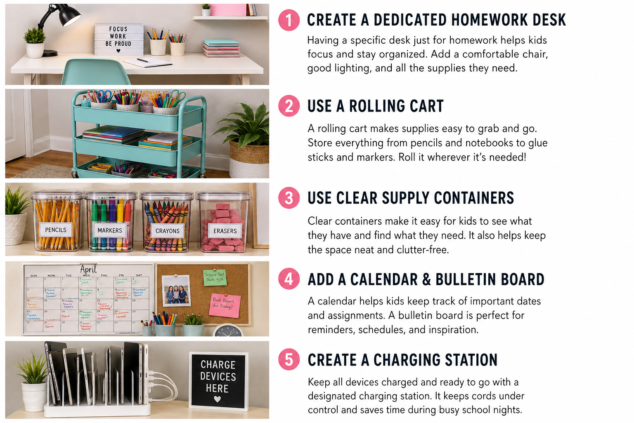
1. Create a Dedicated Homework Desk
If you have the space, designate a small desk specifically for homework. Add a comfortable chair, desk lamp, and basic school supplies so everything your child needs is within reach.
2. Turn a Closet Into a Homework Station
Have an unused closet? Remove the doors and add a small desk or floating desktop. Shelves above the desk can hold books, baskets, and supplies.
3. Use a Rolling Cart
A three-tier rolling cart is one of my favorite portable homework station ideas. Fill it with pencils, markers, paper, notebooks, calculators, and other essentials. Roll it wherever your child prefers to work.
4. Create a Kitchen Homework Station
If your kids naturally do homework at the kitchen table, work with it! Dedicate one kitchen cabinet or drawer to homework supplies.
5. Make a Homework Caddy
For a budget-friendly option, fill a handled caddy with pencils, pens, scissors, glue sticks, highlighters, erasers, and colored pencils. Kids can easily carry it from room to room.
6. Add a Pegboard
Hang a pegboard above the desk and use hooks, cups, baskets, and shelves to organize supplies without taking up valuable desk space.
7. Install Floating Shelves
Small homework area? Think vertically. Floating shelves provide storage for books, binders, paper, and supplies while keeping the desktop clear.
8. Use Clear Supply Containers
Clear organizers make it easy for kids to see exactly what they have. Use containers for markers, crayons, pencils, sticky notes, index cards, and other frequently used items.
9. Label Everything
Labels can make a huge difference in keeping a homework station organized. Label drawers and containers so kids know where supplies belong when they’re finished.
10. Add a Dry-Erase Calendar
Hang a monthly dry-erase calendar above the homework area. Kids can write down tests, projects, activities, and important school deadlines.
11. Create a Charging Station
Designate a spot for charging laptops, tablets, calculators, headphones, and other school technology. A multi-device charging station can help keep cords under control.
12. Include a Comfortable Chair
Don’t overlook comfort. Choose a supportive chair that’s the right height for the desk, especially if your child spends significant time doing homework.
13. Add Good Lighting
A desk lamp is essential, particularly during fall and winter when homework may happen after dark.
14. Create a Small-Space Homework Nook
You don’t need an entire room. Look for an unused corner in a bedroom, hallway, living room, or kitchen where you can fit a compact desk.
15. Repurpose a Nightstand
For very small bedrooms, a nightstand can double as a mini homework desk. Choose one with enough surface space for a laptop or notebook.
16. Hang a Bulletin Board
A bulletin board gives kids a place for schedules, reminders, permission slips, inspirational quotes, and important school papers.
17. Keep a Paper Organizer Nearby
Use a desktop file sorter with sections for To Do, Completed, Parent Signature, and Return to School.
This simple system can help prevent important papers from disappearing.
18. Stock Extra School Supplies
Keep backup pencils, pens, erasers, glue sticks, notebook paper, index cards, and poster supplies nearby. You’ll appreciate having them when a forgotten project suddenly comes up!
19. Add a Homework Timer
A simple timer can help kids work in manageable blocks. Try 20–30 minutes of focused work followed by a short break.
20. Give Each Child Their Own Drawer
If siblings share a homework station, assign each child a drawer, basket, or bin for personal supplies and schoolwork.
21. Create a Tween Homework Station
Tweens may appreciate a homework space that feels a little more grown-up. Let them choose a desk lamp, pencil cup, bulletin board, or a few decorative accessories that match their style.
22. Make a Teen Study Station
For teens, prioritize technology. Include easy access to outlets, laptop storage, headphones, chargers, and enough desk space for textbooks and notebooks.
23. Add Headphone Storage
Install a hook on the side of the desk for headphones. It’s a tiny organization trick that keeps them from constantly disappearing.
24. Create a Distraction-Free Zone
Keep toys, gaming devices, and other distractions away from the homework station whenever possible. Consider having a designated place for phones during focused homework time.
25. Let Your Child Personalize the Space
Finally, make the homework station somewhere your child actually wants to sit. Let them add photos, artwork, favorite colors, a cute pencil cup, or a small motivational sign.
Creating the Perfect Homework Station
The perfect homework station for kids doesn’t have to look like something out of a magazine. It simply needs to make schoolwork easier.
Start with a comfortable workspace, good lighting, and the supplies your child uses most. Then add organization tools like baskets, rolling carts, calendars, shelves, and charging stations.
Most importantly, create a system that works for your family’s actual routine. Whether it’s a full desk in a bedroom or a homework caddy that comes out at the kitchen table every afternoon, having everything in one place can make busy school nights run a little more smoothly.
50 Lunchbox Notes for Kids: Sweet, Funny & Encouraging Messages